
Two explorers have made a significant discovery – a fifth red fingerpost, when it is believed that Dorset had only four.
Dorset has around 700 fingerposts, which are lovingly maintained and point the way to all sorts of places. All but four are white, with black lettering.
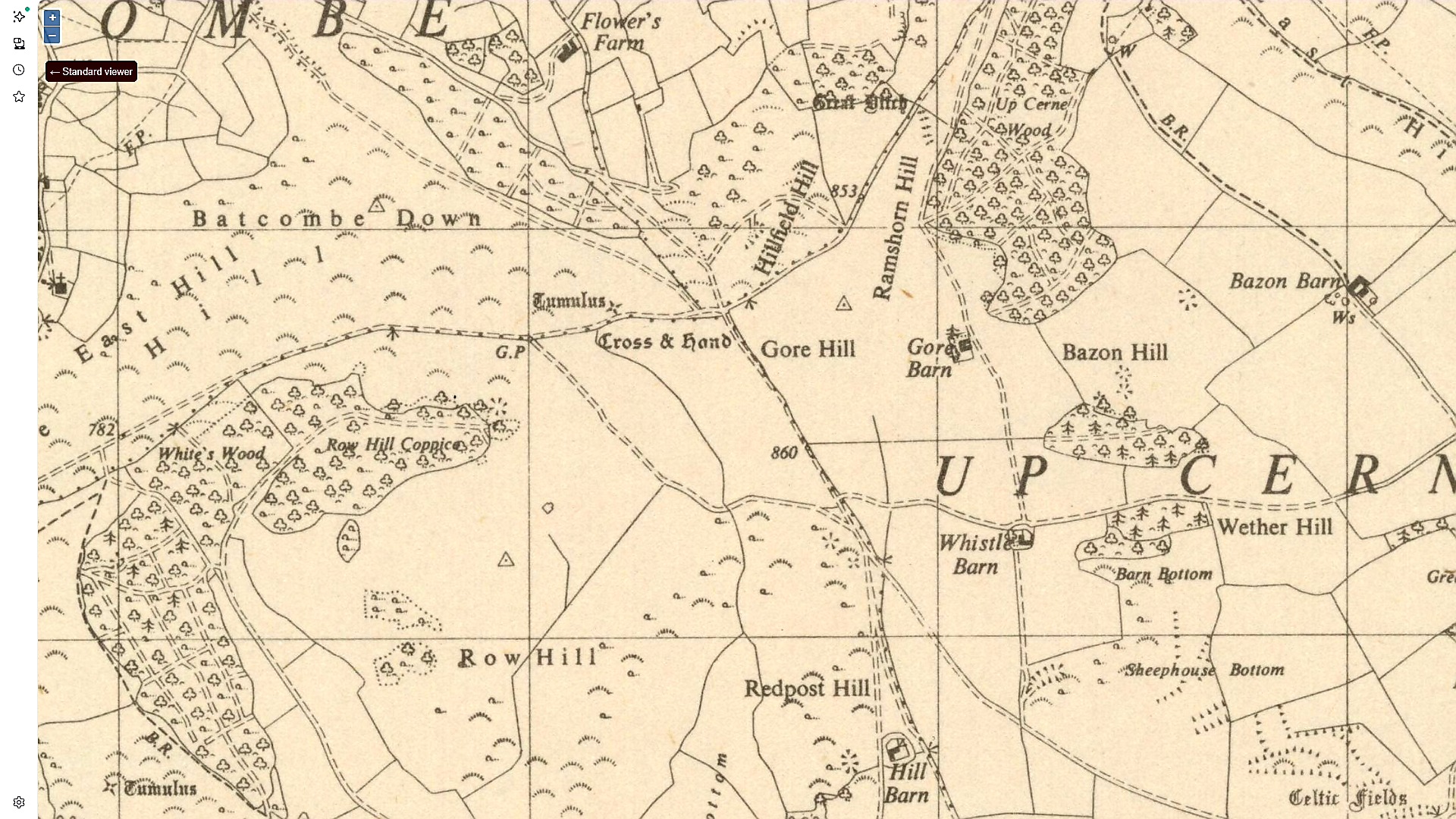
Tim Beer and Andrew Swatheridge happened upon the fifth red fingerpost by accident, when they were near Up Cerne to take down a white fingerpost for repair – near a hill called Redpost Hill.
Tim said: “I think we may have made a major discovery this morning, up on the Great Ridgeway next to Cross and Hand to take down a rather forlorn fingerpost, as we need the letters to make the replacement.
“Whilst I was removing the arms Andrew wandered off for a nose about and shouted to me there was something in the undergrowth I should see.
‘What is it?’ I shouted back, and the answer made me stop instantly: ‘There’s a Red Post up on the bank!’
“Sure enough, there it was, a wooden Red Post with two iron rod type brackets, one pointing to Minterne Magna and one pointing to Holywell and Evershot – no signs, just the rods.
This would have been correct as it was the toll road, minor roads would not have been marked, all other red posts are at the junction of a toll road with minor roads.
“I have been wondering why Redpost Hill was so called. My theory was that there had to be a red post somewhere near. This discovery proves my theory is correct, we had found an unknown red post.
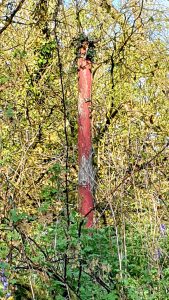
“It would fall over if pushed and it still retains what looks like lead-based paint. Its location would have made it visible from every direction as there were no major plantings of trees, looking at the old maps. We went back and Andrew managed to wriggle the red post carefully out of the ground in one piece, only just managed to get it in the van with about an inch to spare, now the long wait while it dries out completely.”
There are many theories about why some posts should be red with white lettering. One theory says the red posts marked the locations of gallows. Another theory says they were erected on routes taken by convicts being taken to the coast to be transported.
But Tim says the timeline would discredit these theories. He believes they were red “so the coachman could see them and the travellers knew where to wait, just like a bus stop.”