
A developer hoping to build 82 homes on 21 acres of his 131-acre estate has told a national newspaper he is being treated like “the Antichrist”.
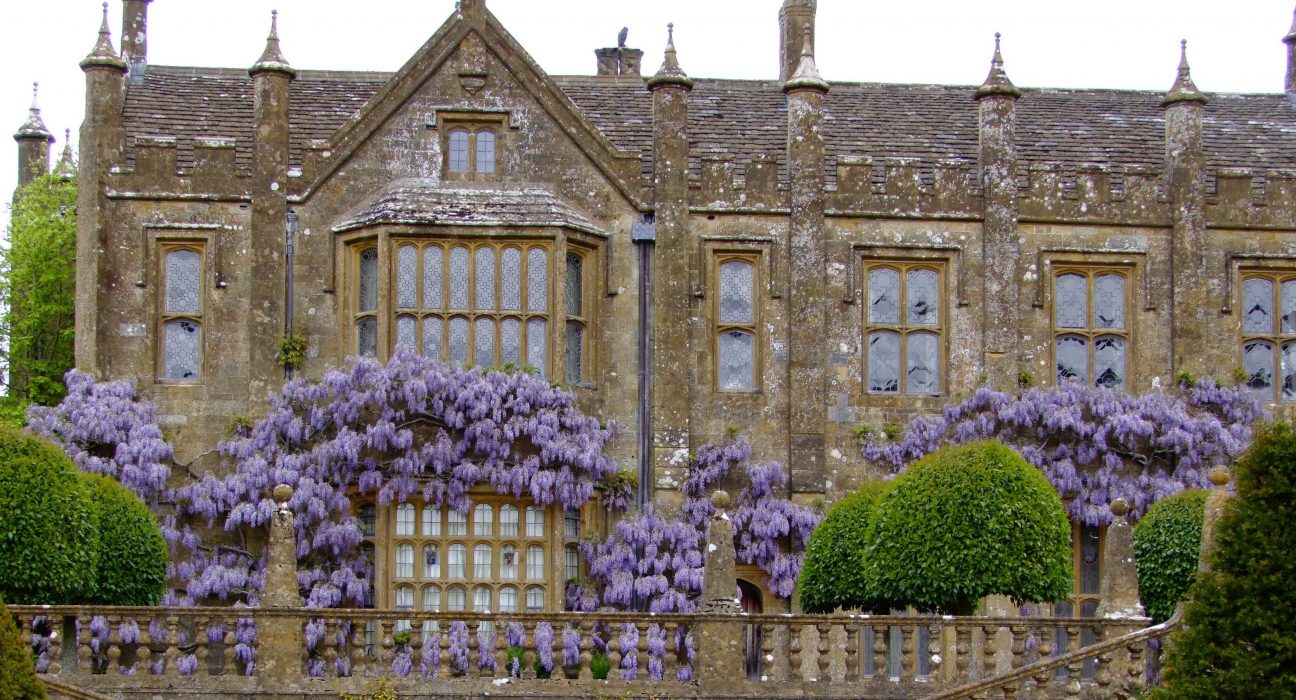
James Perkins, who bought fire-ravaged Parnham House near Beaminster with the intention of restoring it, told The Times he intended to spend £25million on the Grade 1-listed Elizabethan manor, but that locals were being ‘nimbys’.
He said: “I’m not building on your front garden, it’s my garden.”
Perkins bemoaned having to hire consultants to address people’s concerns over flora and fauna on the estate, which was originally designed by Buckingham Palace architect John Nash in the 1880s.
James and Sophie Perkins have already restored four other stately homes. But this project is proving more difficult than most.
They have won planning permission for guest houses, river lodges and a boathouse.
A restaurant has opened and is already featured in the Michelin Guide.
But Mr Perkins’ plans for 82 homes has caused consternation – campaigners say the land is home to protected badgers, including a rare albino badger known as Alberto.
Further concerns have been raised over barn owls, otters, dormice and grass snakes.
Mr Perkins told The Times: “People like me need to be encouraged and I feel like we’re being discouraged. The nimbys think you’re the Antichrist – it can be a lonely journey.”
The two and three-storey homes have been designed to mimic Parnham House, with pinnacles and castellations.
Mr Perkins’ planning agents claim the plans are the only way the Perkins can fund the restoration of Parnham House itself.
Local lawyer Stephen Larcombe said: “The Times piece this weekend,describing the promoter of the Parnham scheme as “the rave king” and suggesting that some in Beaminster see him as “the antichrist”, was certainly colourful.
“But what struck me most was the casual characterisation of local residents as nimbys.
“It feels a curious choice, especially in the middle of such a sensitive and controversial planning application.
“Most people here are simply asking reasonable questions about scale, impact, traffic, noise, heritage, and long term stewardship of a site that matters deeply to the town.
“That is not nimbyism; it is civic responsibility. It is what any community would do when faced with a proposal of this magnitude.
“And so one wonders what purpose is served by painting Beaminster as small minded or hostile. It is hardly a strategy designed to win hearts and minds.
“If anything, it risks confirming the very anxieties people already have, that the community’s voice is something to be dismissed rather than engaged with.”
What’s happening next with the Parnham House planning application?
The planning application is currently “under officer consideration” and can be found on the planning section of the Dorset Council website using the reference numbers P/FUL/2025/06865 and P/LBC/2025/07037.
A decision on the 82 homes is expected in the autumn.
The history of Parnham House
There has been a house on the site of Parnham Park since the 1400s and Parnham House was built around 1522 for Robert Strode, a wealthy cloth merchant.
Influential architect John Nash remodelled Parnham House in 1810. The gardens were also landscaped by Inigo Thomas in the early 19th century.
One previous owner of Parnham House was William Barnard Rhodes-Moorhouse, the first airman to receive the Victoria Cross, who died serving in the Royal Flying Corps during the Second Battle of Ypres.
His son, William Henry Rhodes-Moorhouse, a pilot in the Royal Air Force, was killed in the Battle of Britain and is buried near his father at the top of the hill overlooking Parnham.
During the Second World War, the house was used as an American airbase.
In the late 70s the craftsman John Makepeace bought Parnham and turned it into a school of craftsmanship in wood.
In the 20th century it was used as a country club and a nursing home, then transformed back into a private home before it suffered a devastating fire.
Previous owner Michael Treichl was arrested on suspicion of arson and was found dead two months later.
More stories from Beaminster
- Royal British Legion President Tony Greenham remembers the stillness after US troops left Beaminster
- From fork handles and four candles, Larcombe’s of Beaminster is like stepping into that scene
- Hooray for Henry! Born in Beaminster, the ruddy-faced machine with a massive following