For documentary photographer Carlos Guarita, photojournalism is capturing that moment which will matter.
The exact split-second when visual and psychological elements align, in the moment which will shout: “I was here, this happened, look.”
In 1974, Carlos was following the news on the military coup in Portugal. He left the London theatre group he was touring with and headed home to experience the end of Europe’s longest-lasting dictatorship.
He spent a year witnessing the ‘quite extraordinary upheaval’ heralding the end of the authoritarian Estado Novo regime, later coined the Carnation Revolution.
“When I got back to London, I realised I had no lasting record of my time during this piece of history. I regretted deeply that I hadn’t captured my experience.”
For West Dorset photographer Carlos, this was his decisive moment.
“So, I got a job at the Ford car factory in Dagenham and saved for two decent cameras. I was a Fine Art graduate so knew the basics of photography. I just started taking pictures.”

Carlos soon met Simon Guttmann, the pioneer of modern photojournalism, who was operating press agency Report from Oxford Street.
“He was a cantankerous old man and was running the place like Fagin’s kitchen, getting all these people to run around and get pictures for him.
“He asked me to take some pictures of the strike at Dagenham as no press were allowed in and I was inside. He liked the pictures, and I started working for him. He was a revolutionary really.”
Carlos was commissioned to take shots in a Scottish prison on behalf of the Prison Reform Trust, pictures so profound they were snapped up by the press and launched a career spanning almost five decades.
Carlos found himself in African combat zones, often behind the frontlines capturing a first-hand view of how people are affected by brutal regional conflicts and civil wars.
“War photography at that time in the early 80s was all about showing the effect of these conflicts but not understanding what was going on behind it. I wanted to show the human cost and the causes of such misery.”
Already an established international press photographer, Carlos and a group of friends launched photo agency Reflex, which offered freedom.
He said: “The best pictures are the ones that no one else can get. And I was good at getting stuff no one else had, I was always pushing the boundaries and with my own agency I could do what I wanted.
“Street scrums are no fun. I managed to photograph Yasser Arafat amidst a scrum by the foreign press. It was no joke!”

From Martin Sheen to Margaret Thatcher, his uncompromising lens caught hundreds of candid and unposed moments.
Referencing the picture of Thatcher, taken at the Conservative Women’s Conference at the Central Hall in Westminster, Carlos said: “I took the shot as she looked up in response to clapping in the upper gallery. It is amazing the feeling of power you have over a famous person’s image, when you are optically so close to their face.
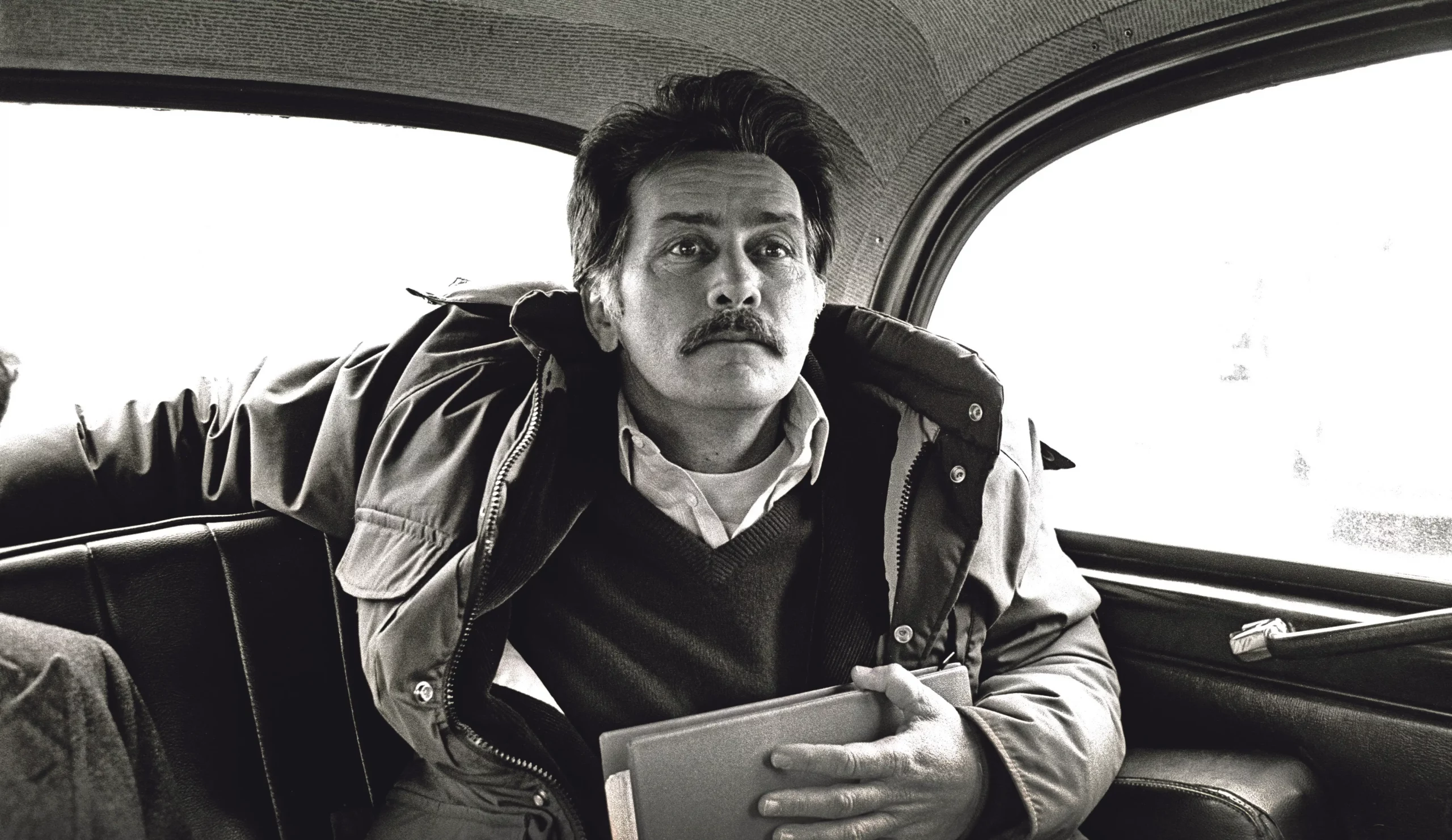
“Hollywood actor Martin Sheen, whose birth name was Antonio Estevez, is of Mexican descent.
“While in London he delivered a letter to the American Embassy in Grosvenor Square protesting about the US intervention in Nicaragua.
“He was going on to The House of Commons to continue his protest. When he heard my name was Carlos, he offered me a lift in his taxi, which is how I took this picture.
“One of the funniest moments is when I shook hands with the Dalai Lama, when I was suddenly bathed in light. I thought I had found enlightenment until I realised scores of television camera lights were switched on at the same time.”
Now a columnist for The West Dorset Magazine, Carlos says many elements are at play to take ‘that’ picture. Luck. Speed. Timing. Feeling.

“If you can’t feel what you’re looking at then you’re never going to get others to feel anything when they look at your pictures.
“And it’s about the decisive moment. Condensing 360 degrees of reality into a single, two-dimensional rectangle.”
Carlos, who celebrated his 80th birthday this year, said: “Anyone can take a pretty picture.
“There are millions of them out there, but the skill is in deciding which one will matter.”
Read more about Carlos Guarita and his photojournalism
Meet Carlos Guarita on his career in combat zones, armed only with a camera