
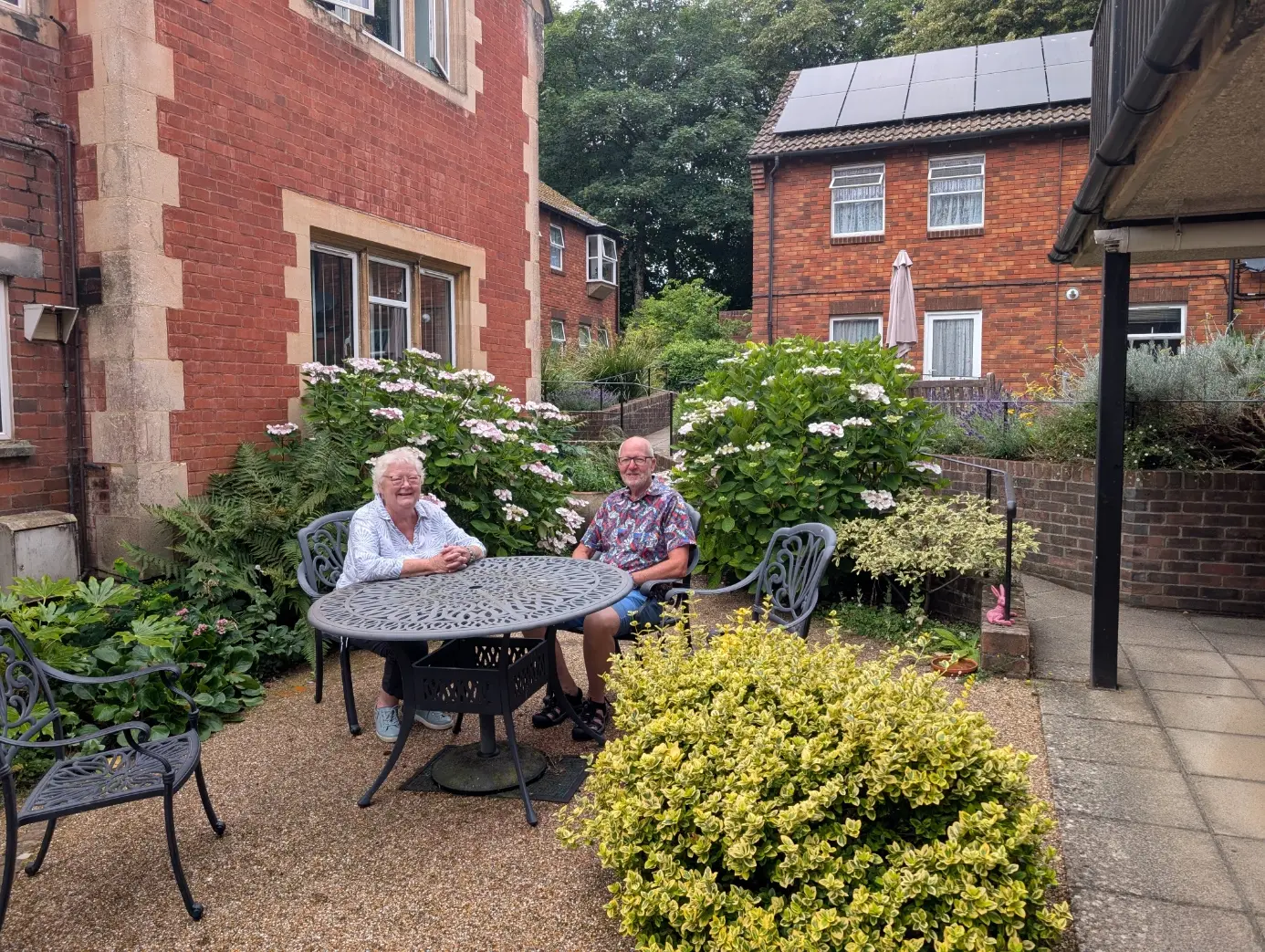
Did you know Dorchester was ahead of its time in social housing?
It seems unlikely, doesn’t it? Yet the largely affluent county town was one of the first places to provide almshouses for people who couldn’t afford market rents.
In 1613, a great fire destroyed 75 homes in the town, which was then the richest town in the county. The Reverend John White saw this as a sign from God – a ‘fire from heaven’ as punishment for Dorchester’s sins. His story was later recounted in one of the town’s community plays.
While the Reverend White preached fire and brimstone, pricking the collective consciences of the rich, this led to a number of social innovations – a huge increase in poor relief, a new training facility, or ‘hospital’ for poor children to learn a trade, and improved care for the sick and elderly.
Dorchester housing has a surprisingly progressive history
A year later, Whetstones almshouses were built, accommodating four married couples, thanks to mercer and bailiff John Whetstone’s £500 bequest. It was built on the site of Dorchester Day Centre on Acland Road, then moved to West Walks in 1900. In 1985 it had a major extension and now has 18 flats and a well-used community room.
Then in 1615, Nappers Mite was built to house ten unmarried men aged over 60 – a considerable age back then, when the average life expectancy in England was 35 to 40. Nappers Mite, which many people will know from its distinctive frontage, bearing a 19th-century corbel bracket clock in South Street, provided accommodation for the poor for centuries before being converted into a café and shops.

It was established by Sir Robert Napier (or Napper) as an act of repentance following the Great Fire. He also left rents from land in Piddletrenthide in perpetuity.
Then in 1620 Chubbs was opened near the prison in North Square, to accommodate ten women. Matthew Chubb had been the richest man in Dorchester and his widow Margaret left £400 for it to be built.
Whetstones, Napper’s Mite and Chubbs later merged and became known as Dorchester Municipal Charities. During the 20th century, the charity changed its name to Dorchester Almshouses and became a charity.
It also opened new almshouses at the Princes Street end of West Walks in 1957, and named them Nappers, in tribute to the original building.
Together, these three almshouses laid the foundations for what we’d now recognise as social housing in the town.
Dorchester’s social housing legacy comes of age
Fast forward to today, when rent in Dorchester is still a modern-day struggle for some, and the almshouses are still going strong. There are currently 18 people housed in the Whetstones almshouses next to the Borough Gardens in West Walks, and 14 new almshouses being planned on the Nappers site, also in West Walks, to replace the 1950s building housing eight almshouses that had become unsustainable.
Not many people will know how much social housing lines the very grand looking, tree-lined road abutting Dorchester’s award-winning gardens. Next door to the existing almshouses, 15 flats for young people are also being built, spearheaded by the Dorchester Area Community Land Trust (CLT), reflecting a wider social housing push in the area.
Chair Molly Rennie said: “Chubbs in North Square was damaged by a very large vehicle and found to be unrepairable. We sold those in 2008 with the promise to spend the money on building new almshouses. We started looking for a site a long, long time ago. We invested the money from Chubbs sensibly over the last 15 years.
“We had conversations with the Duchy of Cornwall to build them in Poundbury – after all, King Charles is the president of the Almshouses Association – but those never came to anything. Eventually we decided to rebuild Nappers, which was built in the 50s and was costing us a lot of money to do work on it.
“People loved it, but it cost a lot to keep it heated. We have a million pounds of our own, but we need quite a lot more millions, most of which should come from Homes England.”
The site poses some problems for the build, with access tight and parking in short supply. Molly said: “The old hospital site goes right up to the back of the site.
“We’ve spent thousands and thousands just on the preparation of the site. Historic England is involved as there are Roman artefacts all over central Dorchester and we will need to dig there first. I’m very proud of our staff, our vice chairman John Christmas in particular, who has done so much of the work on the application.
“What we do is important – I’ve been to see people living in one room because they can’t afford to heat their homes. We can help get them back on their feet again.
“They have to be able to live independently, as we don’t offer care. But they can live here even if they have a carer coming in several times a day.
“We have ground floor accommodation. They have to have a low income or be unwaged.
“What we are doing is building for the future. We don’t have a waiting list – people find us and come to us all the time.”
She added: “The new flats will be open plan, made of the same brick as the CLT’s flats for young people. We hope to
complete them in September-October next year.”
Dorchester Almshouses are always interested in meeting people who want to become a trustee. To find out more,
email office@dorchesteralmshouses.co.uk