
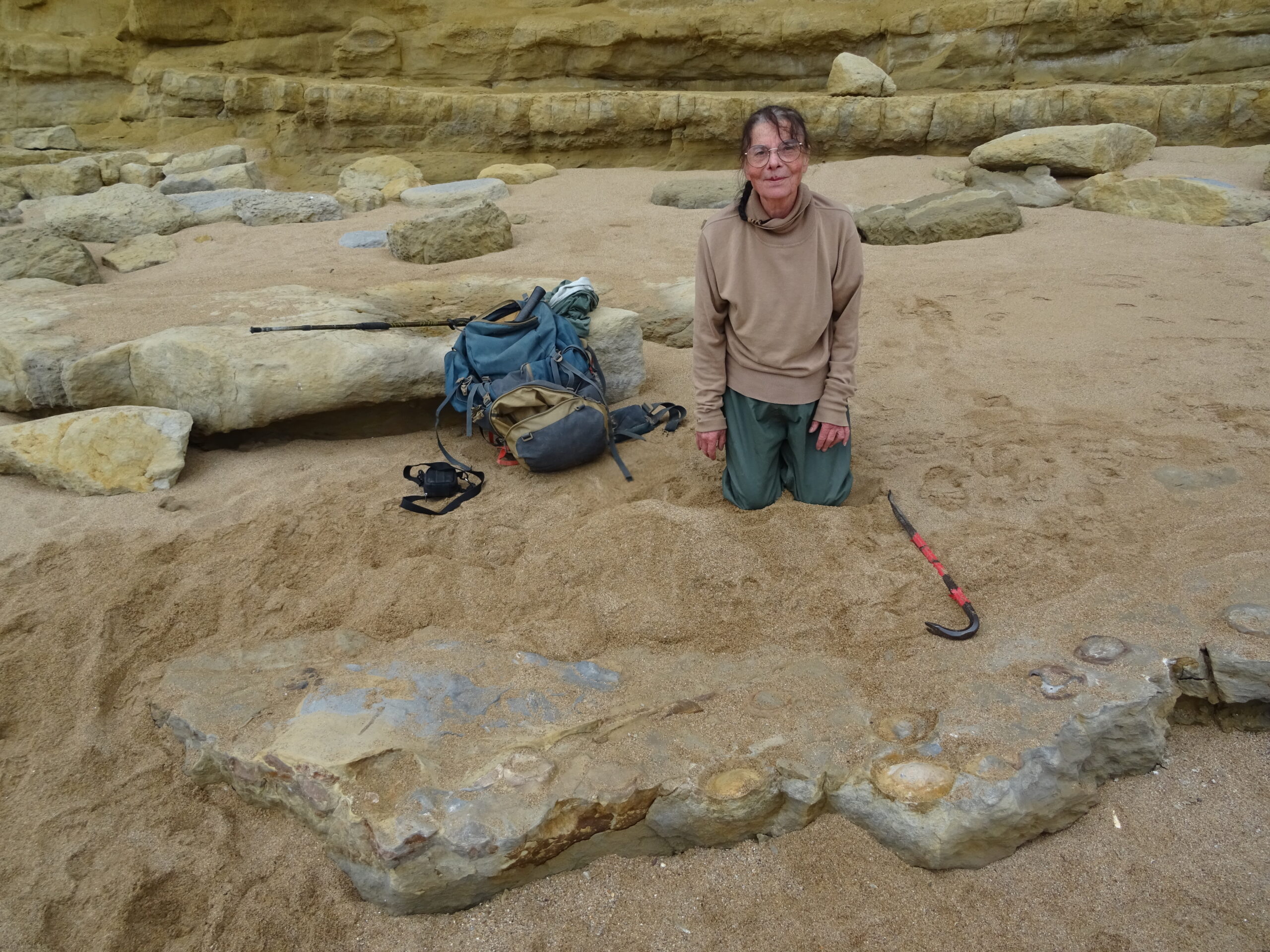
When Michel and Carine Plissart stumbled across dark shapes embedded in a bed of sandstone while exploring a West Dorset beach, they instantly realised they’d found something unusual that could be Dorset fossils.
“We knew it was something of important scientific interest and contacted the Charmouth Fossil Centre straight away,” said Michel.
Experts confirmed the Belgian fossil hunters had found the remains of a large ichthyosaur – the first ever discovered in the Bridport Sand Formation rock layers.
It will form the centrepiece of an exhibition at Bridport Museum this autumn.
The ichthyosaur was a fearsome marine predator that swam in the seas of Dorset at the end of the Jurassic Period, about 185 million years ago.
Ichthyosaurs were successful marine reptiles that lived throughout the world’s oceans and mostly hunted squid and fish. But the larger types, like this one, were top predators that ate smaller ichthyosaurs.
Palaeontologist Sam Scriven, who is the principal officer for world heritage at Dorset Council, said: “Apart from its great size – the animal was nearly 10m long – the Bridport ichthyosaur is unusual in that it lived nine million years after volcanic eruptions reduced oxygen levels in the world’s oceans to the point that most marine creatures died out.
“Its very existence shows that the effect of that environmental crisis on these important marine predators is not well understood.”
The find has been gifted by the landowner to Bridport Museum, and a grant was obtained to prepare the specimen for study at Bristol University.
Dorset fossils in the spotlight
Michelle Caesar, museum manager, said: “This is a very generous gift, and the museum is preparing an exhibition that, we think, will inspire local people and visitors about the fossil history of our part of the world.
“The exhibition will open on October 24, and will run until April 2027, thanks to the kind financial support of many people.
“It will be of great interest to children and enthusiasts alike.
“We are making a short film, will trial a VR experience, and hope to run some talks about the fossil during the period of the exhibition.”