
By Kim Berlin
I have long been enchanted by that long ribbon of water that lies behind Chesil Beach – The Fleet.
The view of it from Abbotsbury Hill is breathtaking and, I would argue, one of the finest landscape views in the world.
The combination of Chesil, the Fleet, St Catherine’s Chapel and Portland beyond with the blue backdrop of the sea is captivating.
But as much as it is beautiful, there is something about the Fleet that is compelling. It is, of course, because it is such an uncommon landscape feature.
A huge lagoon, part fresh, part saltwater, held captive from the sea by the reptilian Chesil, only allowed to drain partially, twice daily, with the tides.
It is also a feature of human ingenuity that unusual situations give rise to unusual solutions. The Fleet is now mostly a nature reserve, but it was, in the past, a source of both fish and wildfowl for food.
But it was also a barrier. It closed the villages behind it off from the open sea, a sea that was filled with fish, easily caught from the shore, an abundant life-giving food source, endlessly harvestable, or so it would have seemed.
The Fleet may look calm and gentle as a body of water, but it presented two problems. It is shallow and it can drain to deep and dangerous mudflats between tides. The coastal communities hidden behind, from Chickerell to Abbotsbury needed a solution to cross the Fleet to access the fish-rich sea to the south.
Much has been written about the local fishing boat, the Lerret, in the past few years. A renewed interest, created by boat builder Gail McGarva BEM, building a new Lerret at the Boat Building Academy in Lyme Regis and the subsequent social history project, capturing the stories of fishing communities along Chesil, brought that boat back from obscurity.
Sarah Acton’s wonderful book, Seining Along Chesil, has sealed the history and remembrance of a disappeared way of life, but there is an unsung hero to whom no one has, as yet, paid much attention – a small, humble boat called the Fleet Trow.
History of the Fleet Trow
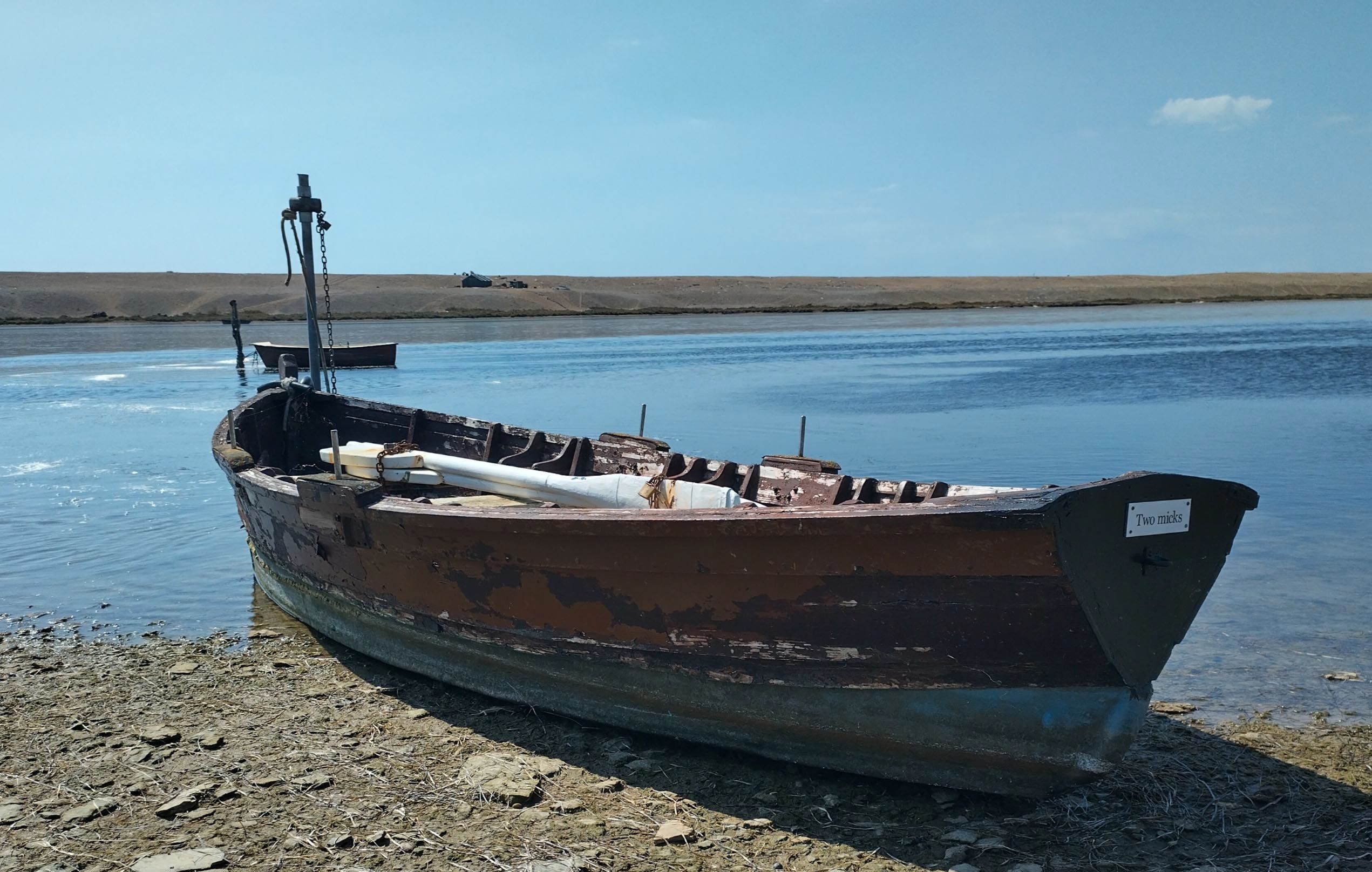
The Fleet Trow was that simple but effective solution to the unusual situation I hinted at earlier; how to cross a shallow body of water to access the abundant fishing grounds on the other side.
The Lerret was too deep keeled to row across. Any boat of that type of construction would get stuck in the mud and hauling it over Chesil Beach on the other side would have been a Herculean task.
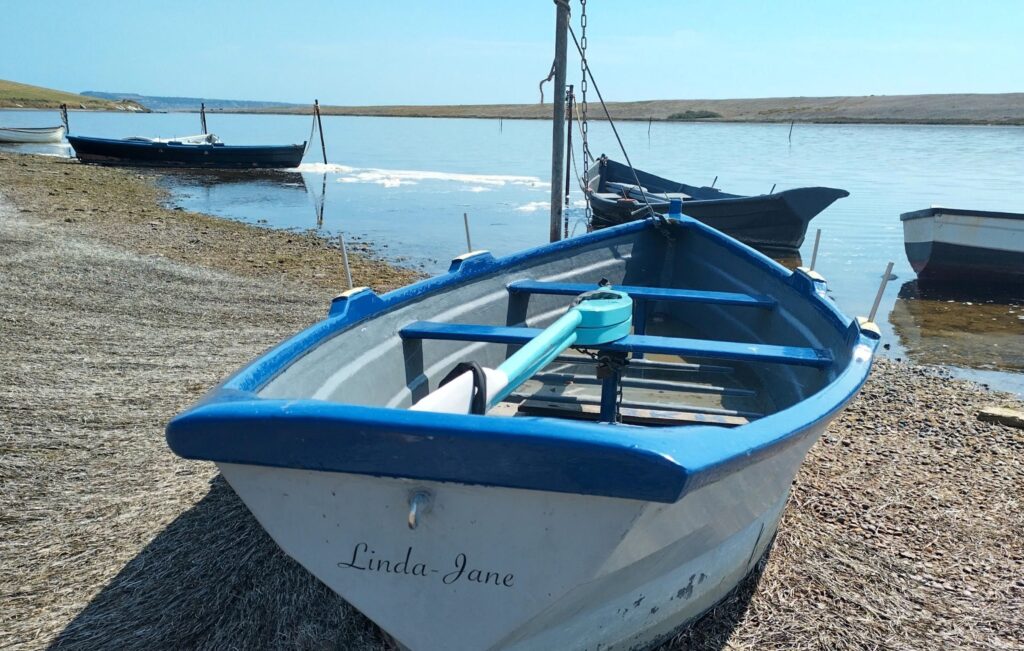
Much easier then, to develop a flat-bottomed boat, that can be both a rowing boat and a punt, to take fishermen across and bring the catch back. The fishermen would have been careful to cross when there was sufficient water, but if a mistake was made, you could sit it out flat on the mud rather than spend several uncomfortable hours lying sideways in a round bottomed boat.
Largely constructed from elm and having a small and impossibly handsome transom at the stern, these small workhorses served their purpose perfectly for generations until the seine fishing on Chesil dried up in favour of more industrialised methods.
Nonetheless, Trows were still built until comparatively recently by Clark’s Boatworks on Portland and as well as wood, some have been made from fibreglass. Small boat designer Gavin Atkin has even designed a sailing version, the plans for which are freely available on his website, intheboatshed.net.
Stable and adaptable, they later became useful as wildfowling punts and were also used for eel spearing, subjects that may be hard for people to contend with now.
There are still a couple of places on the Fleet where Trows, wooden and fibreglass can be seen moored on the landward side.
It’s always a joy to see them, these beautiful little workhorses still ready to go at the water’s edge. On a recent walk I bumped into two of their owners, Gary and Bernard, who generously gave me their time to talk about the Trow.
They regret the passing of the fishing but still maintain and use their boats as generations before them had done and, thanks to them, they are retaining a part of Dorset’s heritage as a living tradition, still rooted in the landscape from which it sprung.